
Complete CPR Technique Guide: Depth, Rate & Best Practices
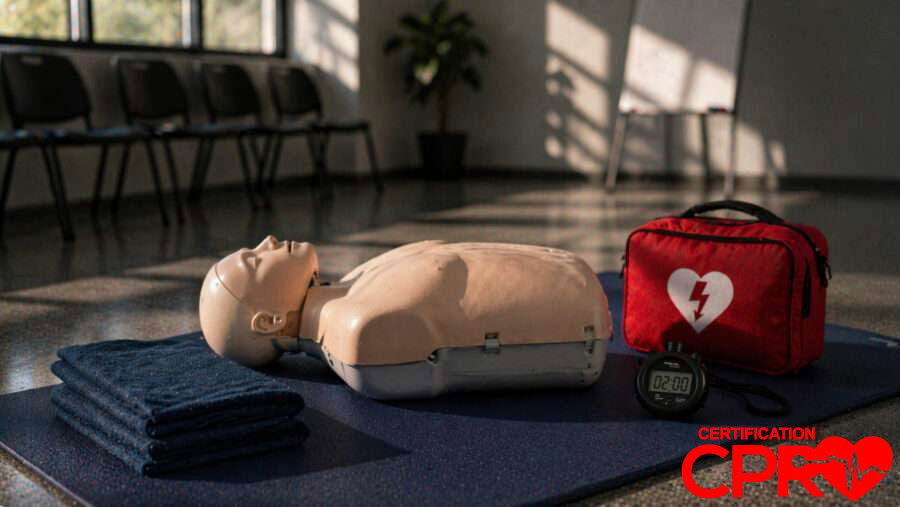
Most people who take a CPR class leave with the right instincts but hazy on the specifics. Push on the chest, yes. But how hard? How fast? Where exactly? What happens if you go too deep? What about kids? When do you stop? These aren’t academic questions. In a real cardiac arrest, the difference between effective compressions and ineffective ones determines whether blood is actually reaching the brain. A complete technique review has to cover rate, depth, position, recoil, rescue breaths, common mistakes, and when to stop, all grounded in current American Heart Association guidelines.
How to Perform CPR on Adults
Before starting compressions, confirm the scene is safe, then check responsiveness: tap the person’s shoulders firmly and call out to them. If they don’t respond, check for breathing, look for chest rise and listen for normal breath sounds for no more than ten seconds. Agonal breathing (gasping, snoring, or gurgling sounds) is not normal breathing. If the person is unresponsive and not breathing normally, start CPR.
Call 911 before beginning, or direct someone specific to call while you start compressions. If you’re alone with no phone, shout for help, then begin compressions.
Positioning: place the person flat on their back on a firm surface. Kneel beside them at the level of their chest. Place the heel of one hand on the center of the chest, directly on the lower half of the breastbone (sternum). Place your second hand on top of the first and interlace your fingers, keeping them off the chest. Lock your elbows and position your shoulders directly above your hands. This geometry lets your body weight do most of the work rather than your arm muscles alone.
Upcoming CPR Class Dates and Times
Compressions: push down hard and fast, then allow the chest to fully recoil before the next compression. The compression-to-recoil ratio should be roughly 50/50, equal time compressing and releasing. Don’t lean on the chest between compressions; full recoil allows the heart to refill with blood.
CPR Compression Rate: How Fast Should You Go?
The AHA recommends a compression rate of 100 to 120 compressions per minute for adults, children, and infants. That range, 100 to 120, sounds precise, but in practice the important thing is staying within it. Below 100 is too slow to maintain adequate blood flow. Above 120 per minute, compression depth tends to suffer because there isn’t enough time to push fully between compressions.
100 to 120 beats per minute is slightly faster than most people expect. Songs often used as pacing guides include “Stayin’ Alive” by the Bee Gees and “Another One Bites the Dust” by Queen, both run at approximately 100 beats per minute. In training, you’ll also hear “push hard, push fast” as a rhythmic cue. Whatever mental metronome you use, the target range is the same.
Counting compressions aloud or using a mental count while performing them helps maintain pace and track cycles. After 30 compressions in CPR with rescue breaths, give 2 rescue breaths, then return to compressions. In hands-only CPR, you simply continue compressions without stopping for breaths.
CPR Compression Depth for Adults
For adults, the AHA recommends compressions of at least 2 inches (5 cm) deep, but no more than 2.4 inches (6 cm). The “at least 2 inches” standard reflects research showing that shallower compressions generate insufficient blood flow. The 2.4-inch upper limit reflects evidence that compressions beyond that depth can cause injury without improving outcomes.
Two inches is deeper than most untrained bystanders push. When people compress at what feels like a firm push, they’re typically reaching only 1 to 1.5 inches, not enough. The compression that reaches 2 inches feels forceful and may feel uncomfortable to deliver. This is one reason hands-on training matters: until you’ve pushed a mannequin to the correct depth and felt what that takes, the verbal instruction doesn’t fully translate.
Ribs can fracture during proper adult CPR, particularly in older adults. This is not a sign that you’re doing it wrong. It is an acceptable consequence of compressions forceful enough to generate meaningful blood flow. Continue CPR if you feel or hear ribs crack.
CPR Compression Depth for Children
For children aged one to puberty, the AHA recommends compressions approximately 2 inches deep (5 cm), or about one-third of the chest diameter, whichever is less. The anatomical difference from adults is that children’s chests are proportionally smaller, so the fraction-of-chest-diameter rule prevents over-compression even as the absolute depth is similar to the adult standard.
Hand positioning for children depends on the child’s size. For most school-age children, one or two hands placed on the lower half of the breastbone work effectively. For smaller children, a single hand may be sufficient. The principle is the same: heel of the hand on the lower sternum, compress to appropriate depth, allow full recoil.
The compression rate for children is the same as for adults: 100 to 120 per minute. If alone and no one has called 911, give 5 cycles of CPR (approximately 2 minutes) before stopping to call, the reason differs from adult protocol because pediatric arrests are more often respiratory in origin than cardiac, and a brief period of CPR before the call may be more beneficial than in adults.
CPR Compression Depth for Infants
For infants under one year old, the recommended compression depth is approximately 1.5 inches (4 cm), or about one-third of the chest diameter. The technique also differs from older ages: use two fingers (typically the middle and ring fingers) placed on the center of the infant’s chest, just below the nipple line. For two-rescuer CPR on an infant, the two-thumb-encircling-hands technique, where both thumbs are placed on the sternum while the hands wrap around the torso, generates better blood flow than the two-finger method and is used when a second rescuer is available.
The rate for infant CPR remains 100 to 120 compressions per minute. The compression-to-breath ratio is 30:2 for a single rescuer and 15:2 when two trained rescuers are present. Infant CPR requires gentle but firm compressions, the small chest and fragile ribs need careful technique, but insufficient depth is the more common error.
When Rescue Breaths Matter in CPR
For adults who collapse suddenly from suspected cardiac arrest, hands-only CPR, continuous compressions without rescue breaths, is as effective as CPR with rescue breaths in the first several minutes. The blood circulating at the time of collapse still contains enough oxygen to sustain the brain briefly. This is why the AHA endorses hands-only CPR for untrained bystanders responding to adult cardiac arrest: the barrier of mouth-to-mouth contact is removed, and immediate compressions are what matter most.
Rescue breaths become more important in specific circumstances. For children and infants, most cardiac arrests follow respiratory failure rather than sudden electrical malfunction, oxygen depletion is often the underlying cause. In these cases, rescue breaths are part of the standard protocol from the start. For drowning victims of any age, oxygen depletion is the cause of arrest, and rescue breaths are recommended immediately. For adults who have been in arrest for several minutes without CPR, ventilations become more important as oxygen reserves deplete.
When rescue breaths are part of the protocol: tilt the head back, lift the chin, pinch the nose closed, and give a breath over one second, enough to produce visible chest rise, but not more. Each breath should take about one second. Excessive ventilation is a common error that increases thoracic pressure and reduces blood flow from compressions.
Common CPR Mistakes to Avoid
Not pushing hard enough is the most widespread CPR error. The necessary depth feels more forceful than most people expect. If you’re uncertain whether you’re deep enough, push harder, adequately deep compressions that feel uncomfortable to deliver are far better than shallow ones that feel polite.
Not pushing fast enough. Below 100 compressions per minute, blood flow drops below the threshold needed to maintain brain function. If you’re counting “one and two and three…” count faster. The rhythm should feel urgent.
Incomplete chest recoil. Leaning on the chest between compressions, even slightly, prevents the heart from refilling with blood between beats. Allow the chest to fully rise after each compression before the next one begins. This is harder to maintain as fatigue sets in, which is why rotation between rescuers matters in prolonged CPR.
Interrupting compressions too often or for too long. Every pause in compressions reduces cerebral perfusion. Keep interruptions to less than ten seconds whenever possible. If using an AED, minimize the gap between the last compression and the shock delivery.
Excessive ventilation. Over-ventilating increases chest pressure and reduces the effectiveness of compressions. If giving rescue breaths, keep each breath to one second and avoid the instinct to breathe in more air than needed to produce visible chest rise.
When to Stop CPR
Continue CPR until one of the following occurs: the person shows obvious signs of life (spontaneous breathing, movement, opening eyes), a trained rescuer or EMS personnel take over, an AED is attached and provides a prompt, or you become physically unable to continue due to exhaustion.
Upcoming CPR Class Dates and Times
Stopping CPR to check for a pulse is generally discouraged for lay rescuers, it interrupts compressions and the check is unreliable. A person in cardiac arrest may have a faint pulse that an untrained rescuer cannot detect. Unless the person begins clearly breathing and moving, assume arrest continues and keep going.
One situation requires a brief interruption: when an AED becomes available. Stop compressions to apply the pads, allow the AED to analyze the rhythm, and deliver the shock if advised. Immediately resume compressions after the shock, don’t wait to see if the person wakes up. Resume CPR for the full two-minute cycle and let the AED advise the next rhythm check.